The Key Bearer
From the Editor’s Desk: The Velvet Blade, Vignette 63

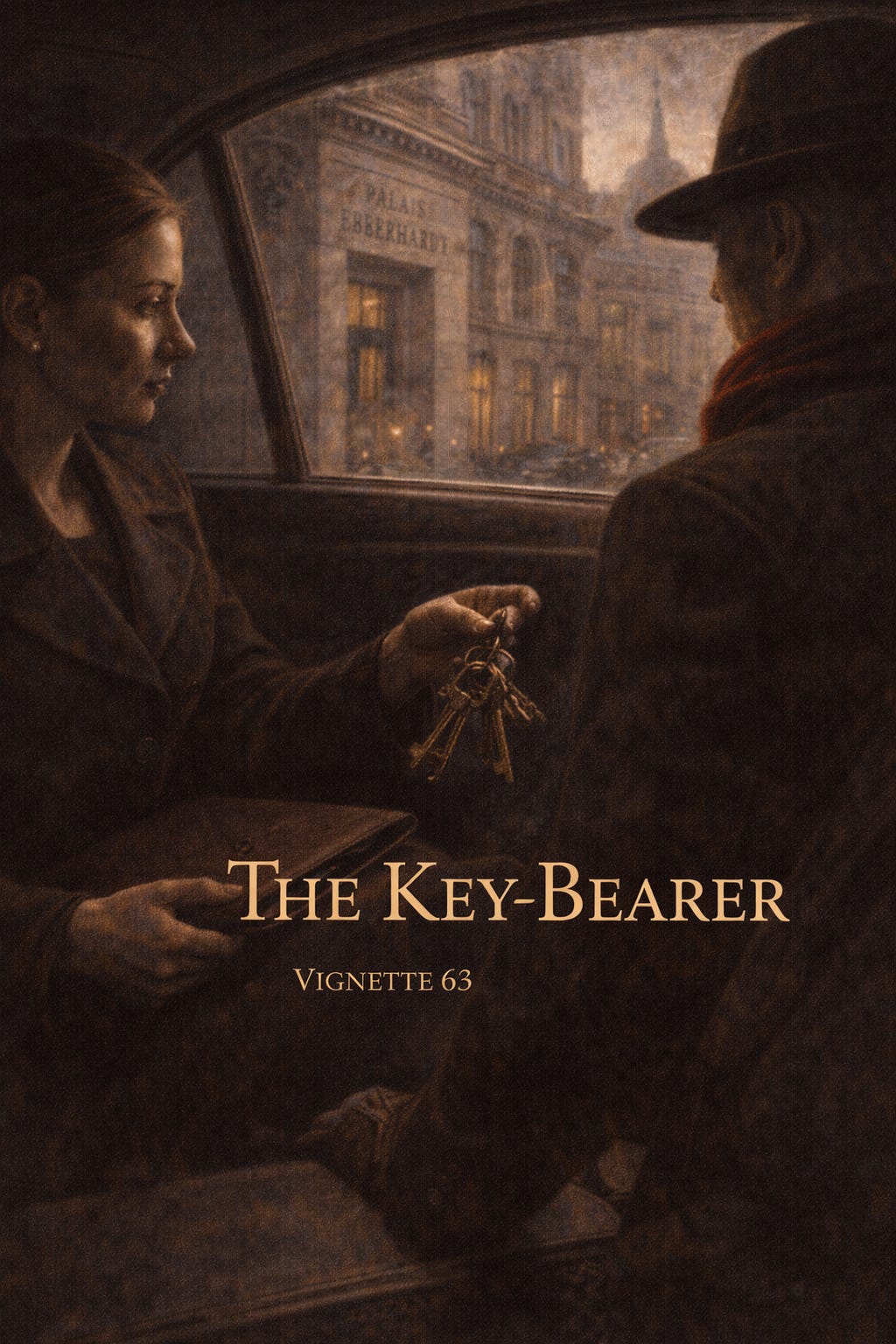
April 15, 1993 — Late Morning | Vienna
Vienna moved past the window in measured panels—pale façades, wet stone, gilded shopfronts that pretended history was a brand. Spring should have been obvious here. Blossoms, warmth, loosened collars. Instead the air looked filtered—coffee steam and diesel softened by perfume, light polished into something flattering and theatrical.
Isaac sat back and let the leather accept him as if it had been expecting his weight.
He carried nothing that looked heavy.
Across from him, Klara Weiss held a slim leather folder on her lap like it was part of her body. Late thirties, maybe early forties. Immaculate restraint. Hair pinned back. Dark coat, clean seams, the kind of clothing that asked for nothing and received compliance anyway.
She did not offer conversation.
She simply confirmed reality with her presence.
The car turned into the Innere Stadt, where the streets narrowed and the city’s confidence rose around them—cafés already full, windows bright, old money arranged into daily routine. Isaac watched it without hunger, reading it the way he read scores: entrances, exits, sightlines, the places where a man could disappear without making it a performance.
At a red light, the glass gave him back a reflection—his face layered over Vienna’s stone.
Hat brim low. Jaw clean. Posture composed enough to be mistaken for belonging.
It was the most dangerous costume he owned.
Klara’s gaze flicked to his hands once—quick, almost involuntary. Not the way staff looked at jewelry, but the way musicians looked at fingers: measuring what they could do, what they had done, what they might still remember.
Then her eyes went back to the street and the moment was buried.
They stopped in a quieter pocket off Kärntner Straße, not where the tourists drifted but where people with keys moved without glancing up. The building’s face was respectable—stone, ironwork, a door that didn’t try to charm anyone. If it had a name, it wore it privately.
Palais Wendl.
The driver opened Isaac’s door. Klara was already out, moving toward the entrance as if she belonged to the building the way smoke belonged to a corridor.
Inside, the lobby smelled faintly of waxed wood and old paper. Quiet, not peaceful—quiet like policy. A security camera sat recessed into the corner of a ceiling molding, discreet enough to feel like etiquette.
Klara didn’t speak to the desk.
She didn’t need to.
She led him to a side lift and waited for him to enter first, as if the gesture cost her nothing.
Upward. Smooth. Silent.
A hallway. Thick carpet. Doors that looked expensive and closed.
At his apartment, she produced the keyring without flourish and placed it into his palm: metal and access, weight that meant the city had already decided how it would treat him.
Only then did she speak.
“Mr. Valentin,” she said, his name clipped into something procedural. “If you require anything, contact me.”
She handed him a card.
No logo. No address. Just a name, a number, and the kind of clean typography that suggested the paper had never been bought at a normal shop.
Klara Weiss.
She paused as if considering whether to add anything at all, then did—quietly, like someone stating a weather change.
“I’ve already verified your name on guest lists for events featuring Signora Calvera,” she said.
Isaac didn’t move.
That was not unexpected—Swan & Keller could buy a room, buy a list, buy a chair near the front and call it culture; Anamaria had also told him to come as her guest. Isaac knew his name was on all the right lists.
But Klara’s next words were softer, stranger.
“Beyond the arrangements,” she added, “it appears she knew you would be coming.”
A small shift in the air—nothing visible, everything changed.
Isaac’s fingers closed around the keys. He felt the cold bite of metal, the steadiness of it, and underneath that a different pressure beginning to form: not Callas’s fire. Not the old molten commandment.
Something newer.
A memory still warm enough to bruise.
Klara gave him one slight nod—acknowledgment, not welcome—and stepped back.
No tour. No instructions. No attempt to be useful beyond the one thing she was hired to be.
She left him in the corridor with keys in his hand and Vienna waiting behind the door like a room that had been prepared too carefully.
Isaac unlocked it and stepped inside.
The apartment smelled untouched—linen, polished wood, a hint of fresh paint someone would insist was “restoration.” Everything arranged to look lived-in without containing a single life.
A home that wasn’t his.
A stage set built for a man who never stayed long enough to leave evidence.
He set the keys down, removed his gloves, and stood very still, listening to the building settle around him.
Somewhere out in the city, a poster or a marquee would be holding her name, inked into Vienna’s spring calendar like a promise.
He adjusted the scarf at his throat as he considered that Anamaria might not be the only one expecting him.
To be continued…