Ricevuto
From the Editor’s Desk: The Velvet Blade, Chapter Eleven

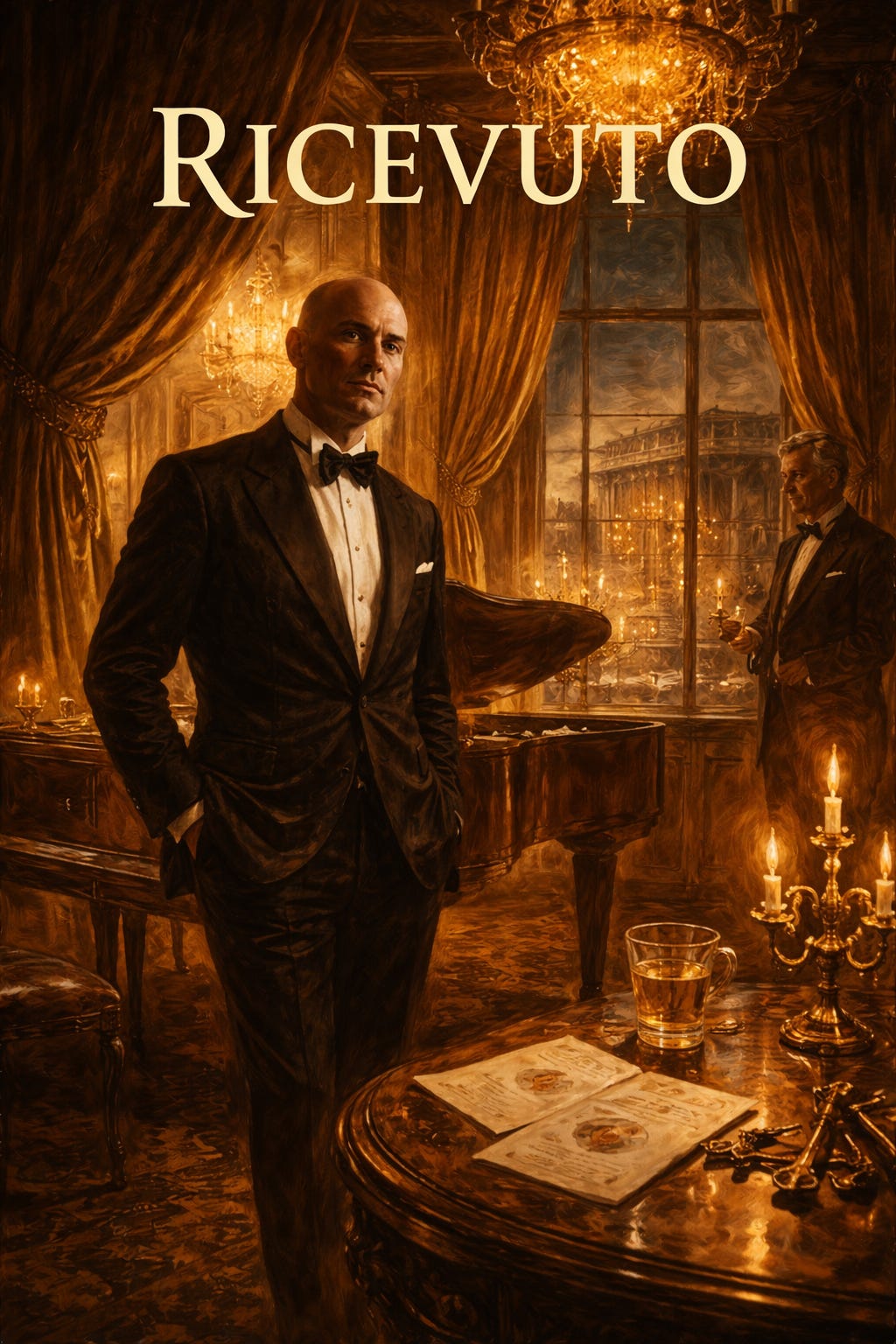
April 15, 1993 — Late Morning | Vienna
Vienna was in bloom.
It just didn’t feel like spring.
Outside the station, chestnut trees had already started to candle—pale blossoms stacked like small white flames along the Ring—and the air held the mixed breath of the city: espresso and damp stone, cigarette smoke sweetened by pastry, rain drying in slow patches on the pavement. A tram bell chimed once and slipped away, polite as a servant clearing his throat.
Wien Westbahnhof did not announce itself.
It received you.
The train exhaled into the platform with restrained dignity, and Isaac stepped down into a crowd that moved as if it had been trained—tourists in bright coats clutching maps, locals wearing boredom like entitlement, porters handling luggage with the calm authority of men who knew what wealth weighed. Vienna made even haste look composed.
Isaac carried nothing that looked heavy.
That was the first lie.
Dark coat. Hat brim low. Scarleted scarf at his throat like a deliberate mistake no one would dare correct. Gloves tucked away. A man built of clean lines and withheld information.
But close to his ribs, where posture could deny it, weight lived anyway: steel, paper, a private inventory of names and doors. The tuning kit had been sent on ahead—because he didn’t travel with evidence when he could travel with absence—and the city, already rehearsing for its festival season, seemed eager to provide him with both.
The announcements clipped through the air in German—platform numbers, departures, delays spoken with the calm of people who believed time could be managed if you named it properly.
Isaac listened anyway.
Not for trains.
For seams.
He moved through the concourse as though he belonged in any city that polished its history into currency. Posters lined the walls and columns—opera, concerts, exhibitions, festivals—beauty scheduled like an obligation. Names of composers. Names of conductors. Names of donors printed smaller, like absolution.
And then—on a tall street column just beyond the doors, a fresh Wiener Festwochen placard in cream and black—he saw her name.
ANNAMARIA CALVERA
The rest of the text blurred at the edges: dates, venue, repertoire—highlights, gala, patrons, rooms where money pretended it had come for culture.
But the name was enough.
It struck him the way a
